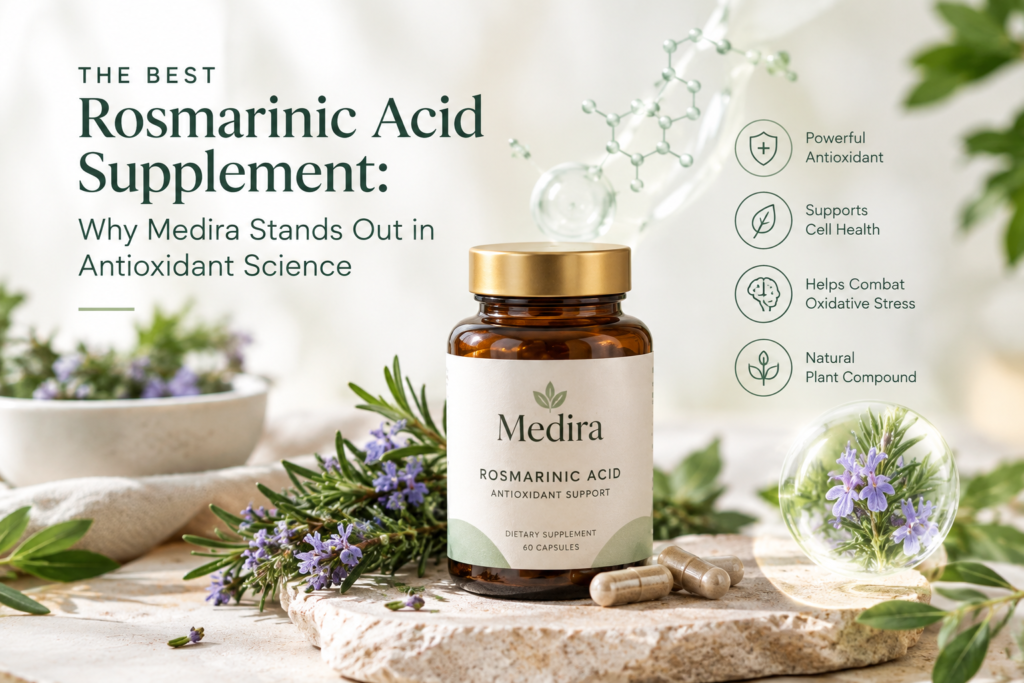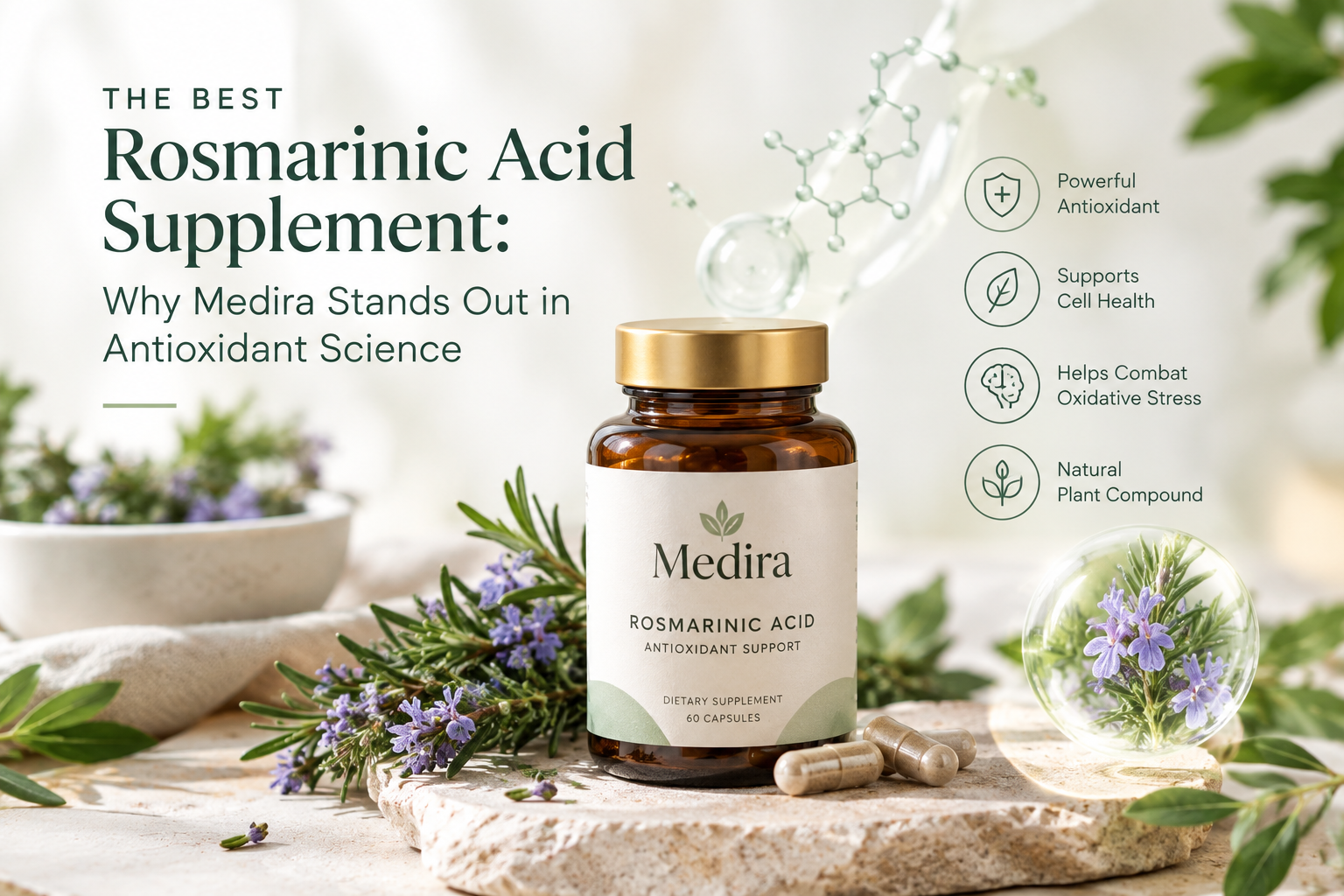
In a world where oxidative stress has been linked to nearly every chronic disease—from cardiovascular conditions to neurodegenerative disorders—finding effective natural antioxidants has become a pressing health priority. But with countless supplements flooding the market, how do you identify the best rosmarinic acid supplement for your health needs?
The answer might surprise you. It’s not just about the rosmarinic acid content, but the synergy between compounds that determines true antioxidant power. And according to groundbreaking research, one supplement is demonstrating extraordinary potential: Medira.
The Oxidative Stress Epidemic: Understanding the Problem
Before we dive into why Medira is being hailed as the best rosmarinic acid supplement, let’s understand what makes antioxidant protection so crucial.
Every day, your body produces free radicals—unstable molecules with unpaired electrons that aggressively seek to steal electrons from other molecules. This process, when balanced, is actually part of normal metabolism. Your immune system uses free radicals to fight infections, and they play roles in cell signaling and energy production.
But here’s the problem: when free radical production overwhelms your body’s antioxidant defenses, you enter a state called oxidative stress.
This isn’t just academic jargon. Oxidative stress is the common denominator in:
- Cardiovascular diseases like atherosclerosis
- Neurodegenerative conditions including Alzheimer’s and Parkinson’s
- Diabetes and its complications
- Inflammatory conditions like rheumatoid arthritis
- The aging process itself
- Various forms of cancer
Dr. Vesna Spasojević-Kalimanovska, a professor at the University of Belgrade’s Faculty of Pharmacy, explains: “When free radicals cause damage to lipids, proteins, and DNA molecules, it becomes clear that oxidative stress is at the root of many diseases.” This fundamental understanding has driven researchers to seek increasingly effective natural interventions.
The Challenge with Synthetic Antioxidants
For years, the pharmaceutical industry relied on synthetic antioxidants like butylated hydroxytoluene (BHT) and butylated hydroxyanisole (BHA). These compounds effectively prevented oxidation—but came with concerning health risks.
Research has shown these synthetic compounds can exhibit carcinogenic potential at high doses and with long-term use. Today, while they’re still used as food preservatives in limited concentrations, they’ve been withdrawn from pharmacological use. This has created a pressing need for natural alternatives that offer superior protection without toxicity.
Enter rosmarinic acid—a compound that’s captured the attention of researchers worldwide.
What Makes Rosmarinic Acid Special?
Rosmarinic acid is a phenolic compound first isolated from rosemary (Rosmarinus officinalis), but it’s found throughout the Lamiaceae family, which includes basil, mint, sage, thyme, oregano, and lavender.
What makes it particularly remarkable is its multi-layered antioxidant mechanism:
Direct Radical Scavenging
Rosmarinic acid donates hydrogen atoms or electrons from its o-dihydroxy groups, forming stable semiquinone and quinone structures. This stabilizes free radicals, preventing them from causing cellular damage.
Metal Chelation
It can chelate metal ions like iron and copper, preventing them from catalyzing the production of damaging hydroxyl radicals through Fenton reactions.
Enzyme Inhibition
Rosmarinic acid inhibits xanthine oxidase—an enzyme that produces free radicals during the breakdown of purines. In pathological conditions like ischemia or tissue injury, this enzyme becomes a significant source of oxidative damage.
Membrane Protection
Unlike many water-soluble antioxidants, rosmarinic acid can penetrate the hydrophobic interior of cell membranes, protecting lipids from peroxidation while maintaining membrane fluidity.
DNA Repair Induction
Perhaps most remarkably, rosmarinic acid doesn’t just prevent DNA damage—it actually induces repair mechanisms for already-damaged DNA.
Enzyme Activation
It boosts the production of primary antioxidant enzymes: superoxide dismutase (SOD), catalase (CAT), and glutathione peroxidase (GPx).
With such comprehensive mechanisms, you’d expect any rosmarinic acid supplement to offer significant benefits. But here’s where the story gets interesting.
The Missing Piece: Why Isolated Compounds Often Fall Short
Despite the impressive properties of rosmarinic acid, isolated compounds often don’t deliver the expected results. Researchers have found that plant compounds work through synergistic effects—the whole is greater than the sum of its parts.
This is where most rosmarinic acid supplements fall short. They isolate one compound when nature provides an entire orchestra of complementary molecules that enhance absorption, activity, and effectiveness.
The best rosmarinic acid supplement recognizes this fundamental principle of phytotherapy.
Enter Medira: A Symphony of Antioxidants
Medira represents a paradigm shift in antioxidant supplementation. It doesn’t just provide rosmarinic acid—it combines it with carefully selected plant hydrosols and honey in a formulation that maximizes antioxidant potential.
The Four Hydrosol Blend
Medira contains hydrosols from four aromatic plants, each contributing unique compounds:
Rosemary (Rosmarinus officinalis)
- Dominant component: Verbenone (41.8%)—a powerful antioxidant monoterpene
- Also contains camphor (7.6%), borneol (10.9%), and α-terpineol (8.3%)
- Research shows rosemary hydrosol significantly reduces advanced oxidation protein products (AOPP)
Lavender (Lavandula angustifolia)
- Rich in linalool (19.6%), terpinen-4-ol (17.0%), and α-terpineol (13.6%)
- Demonstrates excellent superoxide anion scavenging activity
- Shown to increase total antioxidant status (TAS) when challenged with oxidants
Juniper (Juniperus oxycedrus)
- Contains 4-methyl-2,6-bis(1,1-dimethylethyl)-phenol (14.8%)—a compound used to produce natural BHT
- Significant α-terpineol (7.6%) content
Fennel (Foeniculum vulgare)
- Dominated by fenchone (40%)
- Rich in 1,8-cineole (5.3%) and various antioxidant terpenes
The Honey Connection
Medira’s inclusion of honey is particularly strategic. Honey provides:
- Polyphenols and flavonoids
- Vitamin C and E
- Antioxidant enzymes (catalase and peroxidase)
- Trace elements
- Lipophilic components that work in different cellular compartments than water-soluble antioxidants
The antimicrobial and antioxidant properties of honey are intimately connected, providing complementary therapeutic benefits.
Rosmarinic Acid: The Star Player
Each 10 mL of Medira contains 75 mg of rosmarinic acid—a substantial dose backed by significant research.
The Evidence: What Research Reveals
A comprehensive in vitro study conducted at the University of Belgrade’s Faculty of Pharmacy evaluated Medira’s antioxidant activity using multiple parameters:
Study Design
Researchers created serum pools from healthy individuals and tested:
- Medira at 100%, 50%, and 25% concentrations
- The same concentrations plus tert-butyl hydroperoxide (TBH) as a pro-oxidant
- Trolox (water-soluble vitamin E analog) with and without TBH
- Control serum samples
Key Parameters Measured
Total Antioxidant Status (TAS): Measures the combined reductive capacity of all antioxidants in the sample.
Sulfhydryl Groups (SHG): These represent protein thiols and glutathione—the first line of defense against oxidative stress.
Total Oxidative Status (TOS): Quantifies oxidant molecules like hydrogen peroxide and lipid hydroperoxides.
Pro-oxidant-Antioxidant Balance (PAB): Simultaneously measures the balance between oxidants and antioxidants.
Advanced Oxidation Protein Products (AOPP): Indicates protein damage by oxidative stress—a marker of progressed oxidative damage.
Paraoxonase-1 (PON1): An HDL-associated enzyme that prevents LDL oxidation and detoxifies lipid peroxides.
Results That Demanded Attention
The findings were striking:
Without Pro-oxidant Challenge:
- Medira showed significantly higher TAS compared to both serum controls and Trolox
- SHG concentrations were dramatically higher (1.17 mmol/L vs 0.55 mmol/L for serum)
- PAB was markedly lower (3.23 U/L vs 97.80 U/L for serum)
- AOPP was significantly reduced (90.60 μmol/L vs 118.45 μmol/L for serum)
- PON1 activity was significantly elevated
When Challenged with TBH:
- Even with added oxidants, Medira maintained significantly higher TAS and SHG
- PAB remained dramatically lower even in oxidizing conditions
- The TAS/TOS ratio (quantitative measure of the antioxidant/oxidant balance) remained high
The Most Telling Finding:
When researchers compared Medira samples with and without TBH, there was no significant difference in TAS, TOS, PAB, or TAS/TOS ratio. This means Medira maintained its protective effects even when challenged with a powerful oxidant.
The only parameters that showed significant changes were SHG (which decreased) and AOPP (which increased)—both expected responses to oxidative challenge. Yet even with these changes, Medira still outperformed both serum controls and Trolox.
Why This Matters for Your Health
These research findings translate to real-world health benefits:
Superior Protection
The best rosmarinic acid supplement should maintain protection when you need it most—during periods of increased oxidative stress from illness, environmental toxins, or lifestyle factors.
Synergistic Advantage
Medira’s combination approach creates protection at multiple levels:
- Water-soluble antioxidants (from hydrosols) protect the bloodstream and extracellular spaces
- Lipophilic components (from honey) protect cell membranes
- Enzyme support maintains your body’s own antioxidant systems
- DNA protection and repair prevents and fixes oxidative damage
Comprehensive Coverage
Instead of targeting just one pathway, Medira’s compounds protect:
- Proteins (reduced AOPP)
- Lipids (increased PON1 activity)
- DNA (direct and repair mechanisms)
- Membranes (through integration into lipid bilayers)
Balanced Approach
Unlike supplements that push the system into overdrive, Medira supports the body’s natural balance—enhancing antioxidant capacity while simultaneously reducing oxidative load.
Addressing Common Concerns
“Can’t I Just Eat More Rosemary and Honey?”
While consuming fresh herbs and honey is certainly beneficial, achieving therapeutic doses of active compounds through diet alone is challenging. The standardized concentration of rosmarinic acid (75 mg/10 mL) and the specific hydrosol ratios in Medira provide consistent, research-supported doses.
“Isn’t Vitamin E Sufficient?”
The study found Medira outperformed Trolox (vitamin E analog) in most parameters. Interestingly, when Medira was compared to Trolox with TBH, Medira showed higher TAS and SHG with lower PAB—even when vitamin E was in an unoxidized state. This suggests the multi-component approach offers broader protection than isolated vitamin E.
“What About Potential Interactions?”
As a natural compound blend, Medira generally shows a favorable safety profile. However, as with any supplement, consult your healthcare provider before starting, especially if you take medications or have pre-existing conditions.
The Bigger Picture: Why This Research Matters
This isn’t just academic curiosity. The findings from the University of Belgrade study represent a significant advance in natural antioxidant science. Here’s why:
Validating Traditional Knowledge
The use of aromatic plant hydrosols and honey has been part of traditional medicine for millennia. This research provides scientific validation for these time-honored practices.
Developing Better Therapeutic Approaches
Understanding how these compounds work synergistically opens doors to developing more effective interventions for oxidative stress-related conditions.
Informing Public Health
With chronic diseases representing the majority of healthcare costs, effective natural interventions could have substantial public health implications.
The Future of Rosmarinic Acid Research
The research on Medira and rosmarinic acid continues to expand. Scientists are now exploring:
- In vivo studies to confirm these in vitro findings in living organisms
- Specific disease applications from neurodegeneration to cardiovascular health
- Optimal dosing strategies for different health conditions
- Long-term safety and efficacy studies
Practical Considerations
If you’re considering Medira as part of your health regimen:
Quality Matters
Look for standardized products that guarantee rosmarinic acid content (75 mg per 10 mL in Medira’s case).
Comprehensive Approach
Remember that supplements work best as part of a holistic health strategy that includes:
- A nutrient-dense diet rich in fruits and vegetables
- Regular physical activity
- Stress management
- Adequate sleep
- Limited exposure to environmental toxins
Individualization
Your antioxidant needs depend on many factors: age, health status, lifestyle, and genetic factors. What works for one person may not be optimal for another.
Conclusion: What Makes Medira the Best Rosmarinic Acid Supplement
After reviewing the evidence, several factors distinguish Medira as the best rosmarinic acid supplement currently available:
- Research-Backed Effectiveness: Not just containing active compounds, but proven in controlled studies to outperform standard antioxidants like vitamin E, even under oxidative challenge.
- Synergistic Formulation: Combining rosmarinic acid with complementary plant hydrosols and honey creates protective effects that isolated compounds can’t match.
- Comprehensive Protection: Addressing multiple pathways—from direct radical scavenging to enzyme support and DNA repair.
- Robust Performance: Maintaining effectiveness even in challenging oxidizing conditions, as demonstrated by the TBH challenge in the study.
- Natural Origins: Derived from plant sources rather than synthetic compounds, reducing the risk of adverse effects.
- Scientific Validation: Subject to rigorous testing using recognized oxidative stress parameters (TAS, SHG, PAB, TAS/TOS ratio, AOPP, PON1).
Ready to Experience the Power of Synergistic Antioxidant Protection?
If you’re concerned about oxidative stress and its role in aging and chronic disease, Medira offers a scientifically validated approach to supporting your body’s natural defense systems. Remember, investing in your antioxidant defenses today may be one of the most important health decisions you make.
Consult your healthcare provider to determine if Medira is right for your individual health needs. And if you’ve tried Medira, we’d love to hear about your experience in the comments below.
Disclaimer: This information is for educational purposes only and is not intended to diagnose, treat, cure, or prevent any disease. Always consult with a qualified healthcare provider before starting any new supplement.